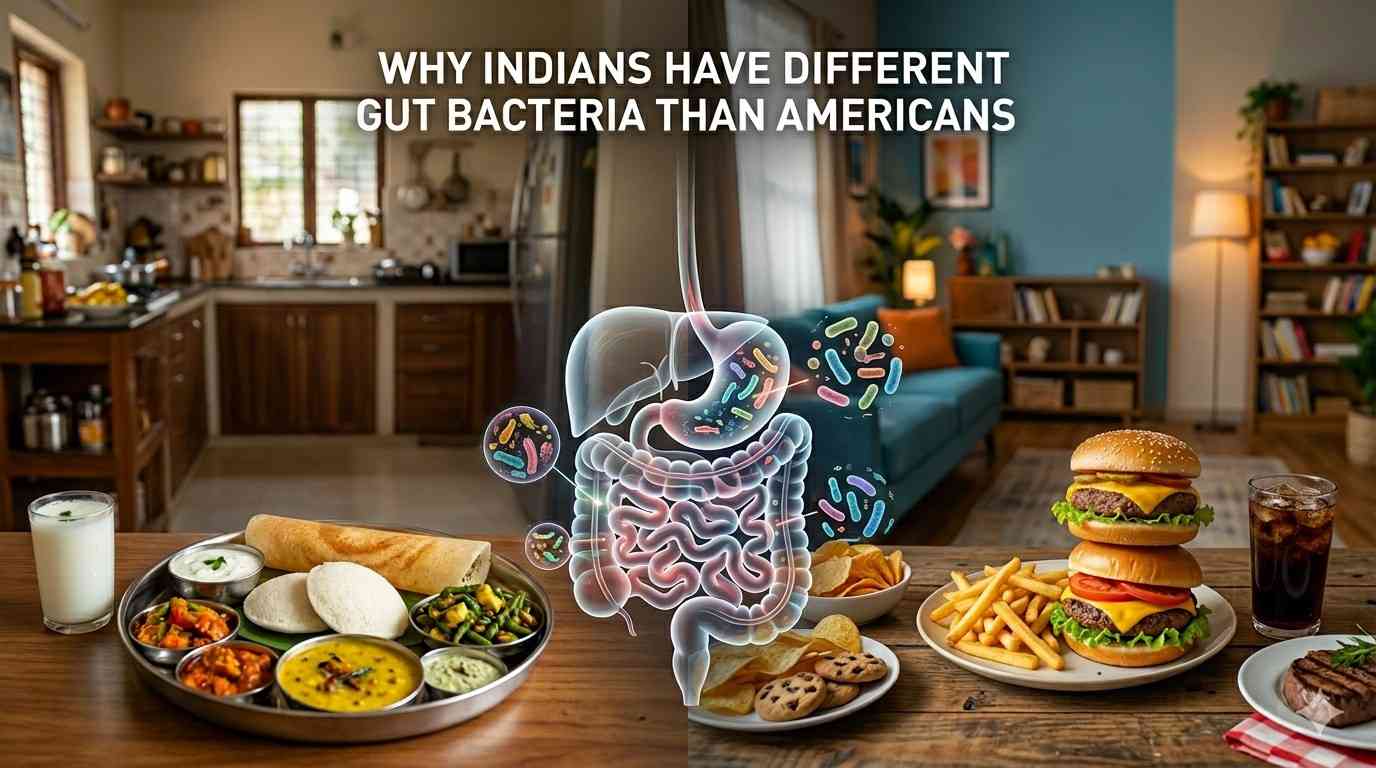
Your gut is home to trillions of microorganisms, bacteria, fungi, and viruses, collectively known as the gut microbiome. These microbes play a central role in digestion, immunity, and even mental health.
But here is something many people do not know: the gut microbiome of an Indian person looks very different from that of an American. This difference is not random. It is shaped by food, lifestyle, geography, and centuries of cultural practice, and it has real consequences for your health.
When gut microbiota becomes imbalanced, often fueled by a Western-style diet, it may increase the risk of lifestyle conditions like PCOS, type 2 diabetes, obesity, and insulin resistance.1 2
Let’s understand this further.
The Bacteria Are Actually Different
Indians and Indo-immigrants had a distinctly different gut microbiome compared to their Western counterparts. They have high abundances of Prevotella species and carbohydrate-active enzymes (CAZymes), reflecting their high complex carbohydrate diet.3
A landmark study further confirmed this. They found that the gut microbiota of Indians is distinctly different from that of Americans, with the predominance of the genus Prevotella and Megasphaera being the most distinctive feature of the Indian gut microbiome.4
Americans, on the other hand, tend to have a gut dominated by Bacteroides,5 a genus more associated with high-fat, high-sugar, low-fibre Western diets.6
| What Contains a Western Diet? Ultra-processed foods, sugary drinks, red meat, refined carbs, and low-fibre meals. |
Why the Difference Exists
The primary driver is diet. The traditional Indian diet is rich in plant-based foods, legumes, whole grains, and fermented preparations, all high in dietary fibre.
Prevotella, the bacteria dominant in Indian guts, thrives on complex carbohydrates and fiber7. It is essentially shaped by what has been eaten across generations.
A study published in PMC found that 59% of Indians in India do not consume meat, and they also had the lowest consumption (only 12% of caloric intake) of ultra-processed foods, compared to significantly higher rates in westernized populations.8 This dietary pattern directly feeds and sustains a fiber-adapted microbial community.
Geography and lifestyle also matter. Urban versus rural Indians, people from Kerala versus Rajasthan, even within India, gut bacteria vary. But when compared globally, the Indian microbiome clusters more closely with non-Western populations than with Americans or Europeans.
| What does a healthy Indian diet have? Fibre-rich veggies, dals, whole grains, spices, curd, and fermented foods that nourish your gut. |
What This Means for Your Health
This is where it gets practically important.
1. Lower Risk of Certain Gut Disorders (For Now)
India has historically reported one of the lowest incidences of inflammatory bowel disease (IBD) globally9. It is noted that a fiber-rich microbiome may help maintain gut barrier function and immune balance, both of which are protective against IBD.
However, as urbanisation increases and processed foods enter the picture, India is beginning to follow the same rising IBD trend seen in industrialized nations10.
2. The Risk of Westernization
When Indians migrate to countries like the US or Canada and shift to Western eating patterns, their gut bacteria begin to change too.
A study found that Indo-Canadians’ gut bacteria gradually became more similar to those typically seen in Western populations as they adopted more Western dietary habits. This change was linked to a higher risk of developing inflammatory bowel disease (IBD).3
In fact, while India had an IBD incidence rate of 2.34 per 100,000 person-years, South Asians in Canada showed a rate of 14.6 per 100,000 person-years.3
This tells us something important: your gut bacteria are not fixed. They respond to what you eat.
3. Western “Gut Health” Advice May Not Apply to You
Many popular gut-reset diets, such as high-fat, low-carb, or keto-style plans, are designed with a Western gut in mind.
An Indian gut, rich in Prevotella, is adapted to complex carbohydrates and plant fiber. Blindly following these trends could actually disrupt a microbiome that is already well-suited to your ancestral food patterns.
The Role of Indian Fermented Foods
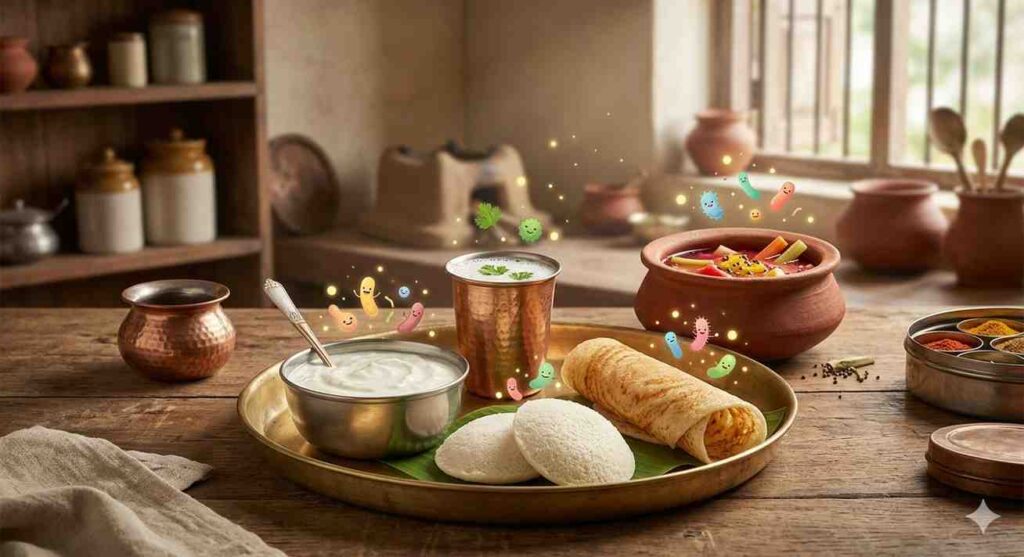
India’s traditional fermented foods deserve special mention.
Regular consumption of fermented foods like dahi, idli, and kanji correlates with increased abundance of short-chain fatty acid (SCFA)-producing bacteria such as Faecalibacterium, lactobacilli, and Bifidobacterium, all hallmarks of a healthy, diverse gut microbiome.11
These are not discoveries. Indian kitchens have practised this for centuries without calling it “probiotic therapy.”
🦠 Gut health quiz
What fermented food do you eat most?
Pick one — find out what it’s quietly doing for your gut.
Your gut says thank you
Different Ethnicities Have Different Gut Microbiomes
Your gut bacteria are a reflection of where you come from, what you eat, and how you live. The Indian gut microbiome is not inferior or superior to an American one; it is simply different, and well-adapted to a traditional Indian diet and environment.
The science is telling us to think carefully before abandoning traditional food habits. Dals, whole grains, seasonal vegetables, and fermented foods like dahi and idlis are not just cultural staples; they are microbial medicine. The best thing you can do for your gut health, as an Indian, may already be sitting on your plate.
FAQs
1. What are the super six gut foods?
The super six gut foods include yogurt, kefir, fermented foods, fibre-rich fruits, leafy vegetables, legumes, and whole grains that feed healthy gut bacteria.
2. What are the 7 signs of an unhealthy gut?
Bloating, constipation, diarrhea, stomach pain, fatigue, food intolerance, skin issues, and frequent cravings can signal an unhealthy gut.
3. How do I reset my gut in India?
Eat fibre-rich foods, include dahi or fermented foods, reduce junk food, stay hydrated, sleep well, and manage stress consistently.
4. What naturally kills bad bacteria in the gut?
Garlic, ginger, turmeric, probiotics, fibre-rich foods, and polyphenol-rich foods help support healthy gut bacteria balance naturally.
Disclaimer
This article is for informational purposes only and does not constitute medical advice. Consult a qualified healthcare professional for personalized guidance.
References
- https://pmc.ncbi.nlm.nih.gov/articles/PMC4303825/
- https://pmc.ncbi.nlm.nih.gov/articles/PMC4303825/
- https://www.nature.com/articles/s41522-025-00778-8
- https://pmc.ncbi.nlm.nih.gov/articles/PMC4860526/
- https://pmc.ncbi.nlm.nih.gov/articles/PMC8398149/
- https://pmc.ncbi.nlm.nih.gov/articles/PMC7721435/
- https://pmc.ncbi.nlm.nih.gov/articles/PMC8497558/
- https://pmc.ncbi.nlm.nih.gov/articles/PMC10872157/
- https://academic.oup.com/femsec/article/98/12/fiac133/6825449
- https://pmc.ncbi.nlm.nih.gov/articles/PMC9991178/
- https://www.mdpi.com/2304-8158/15/4/687


Post Comment