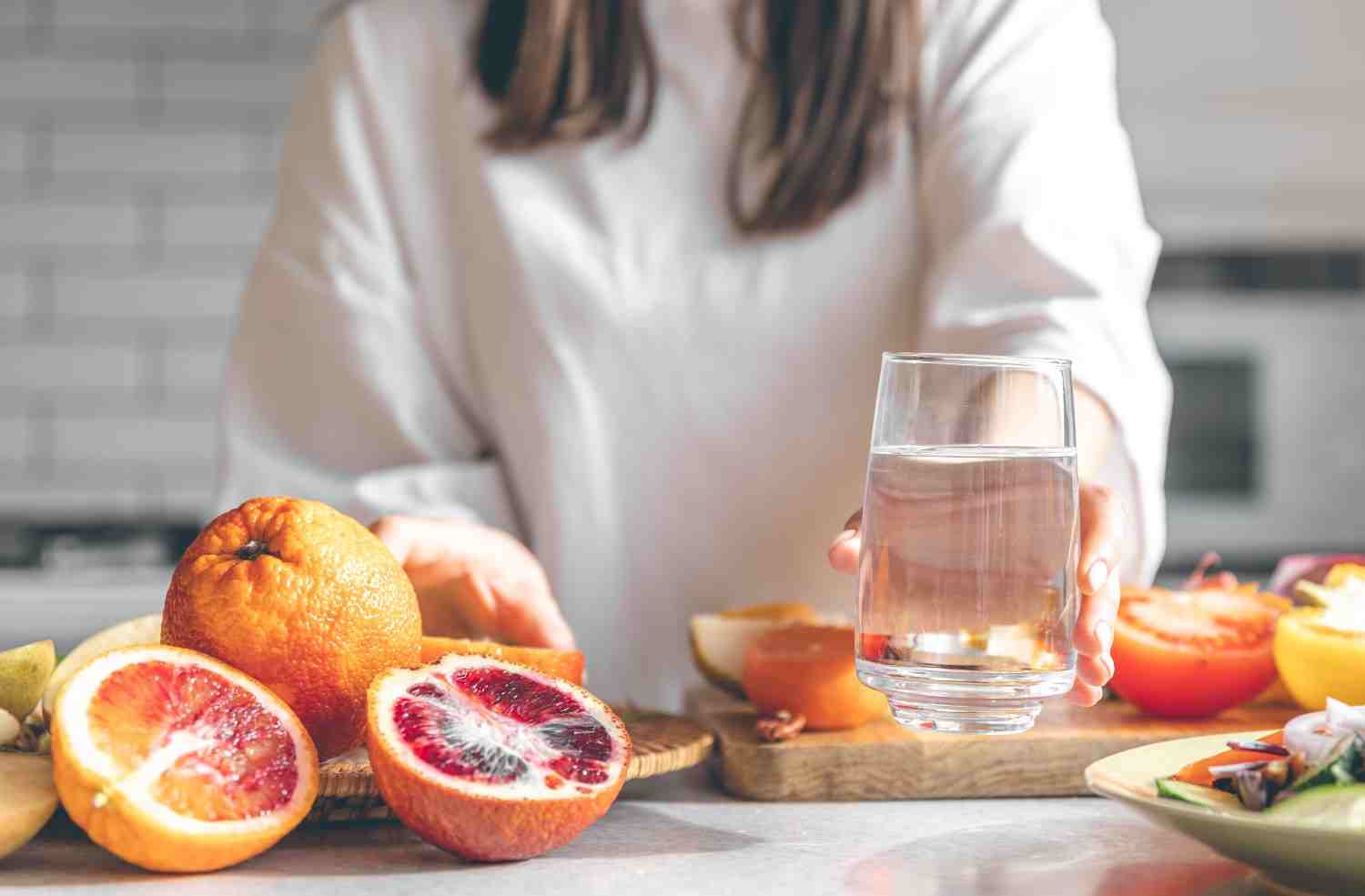
Most adults should drink about 2.7 L and 3.7L of total water a day for women and men, respectively. 1 That includes water from food and all beverages, not just plain drinking water.
Your actual needs can be higher if you live in a hot climate or are physically active. So, there’s no universal “8 glasses a day” rule.
But here’s where hydration gets interesting. Your gut is one of the places where low fluid intake can show up, leading to serious problems.
So, how much water does your gut actually need? The answer isn’t simply “drink more.” It depends on what you’re eating, how much fluid you’re losing, and how well your digestive system is moving.
Why Does Your Gut Need Water in the First Place?
Water isn’t just a hydration checkbox for your gut; it’s structural. Your digestive tract depends on consistent fluid to keep bowel function normal, and the mucus lining your gastrointestinal tract is over 98% water. That mucus layer is what protects your gut’s barrier.2
When you’re not drinking enough, that shows up fast in your stool. Less water in your system means less water in your stool, which means harder stool that’s more difficult to pass and a higher risk of functional constipation.3
Gut Hydration Self-Check
Answer these four questions honestly. It takes about 20 seconds.
Are your stools often hard or pellet-like?
Have you recently increased your fiber intake?
Are you drinking very little fluid throughout the day?
Are you constipated most of the time?
Can Dehydration Affect Your Gut's Immune System?
This is the part most people never hear about: hydration doesn't just affect your bowel movements. Research suggests it also plays a role in keeping your gut's microbial and immune balance in check.3
Studies comparing people with lower versus higher water intake found real differences in certain bacterial populations, although diet, alcohol consumption, exercise, and other lifestyle factors also matter.3
The clearest picture comes from animal research. When researchers restricted water in mice, they observed:3
- More gut microbes: Water restriction was linked to an increase in certain gut bacteria.
- Fewer immune cells: The number of Th17 cells, which help defend the intestine, decreased in the colon.
- Weaker pathogen defence: The gut became less able to clear harmful intestinal pathogens.
The mechanism behind this involves aquaporin 3, a water-channel protein that plays a role in how Th17 cells function.3
These findings suggest that adequate hydration may help maintain microbial and immune balance in the gut, but more research is needed to determine the extent of these effects in humans.3
Signs Your Gut May Not Be Getting Enough Fluid
Low fluid intake can show up as harder stools, less frequent bowel movements, and constipation, particularly when you're already underhydrated. Fluid restriction can also reduce stool weight and frequency.
The Hidden Danger: How Chronic Low Hydration Threatens Your Health Consistently failing to drink enough fluid is far more than a minor oversight.3 Research links chronic low fluid intake directly to alarming conditions, including obesity, insulin resistance, and type 2 diabetes. Observational studies continue to explore the exact mechanisms. |
So, How Much Water To Drink In a Day for a Healthier Gut
Your gut doesn't need you to obsess over a water target. It needs adequate, consistent hydration to support normal digestion, softer stools, and a healthy intestinal environment.
So, instead of counting glasses, pay attention to your overall fluid intake, activity, climate, and fibre intake. And if you're adding more fibre to your diet, make sure you're not forgetting the water that helps it do its job.
Your gut doesn't need a hydration hack. It needs consistency. Drink enough to stay hydrated and healthy.
FAQs
1. Can you drink too much water for gut health?
Yes. More isn't always better. Once you're adequately hydrated, research doesn't show that continually increasing water necessarily improves constipation.
2. Does water help with bloating?
Not reliably. Bloating has many causes, and drinking extra water isn't an established treatment on its own.
Is cold water bad for digestion?
Not for most healthy people. However, one small study found cold water increased abdominal symptoms in people with IBS, so temperature may matter if you personally notice sensitivity.4
References
- https://www.nationalacademies.org/news/report-sets-dietary-intake-levels-for-water-salt-and-potassium-to-maintain-health-and-reduce-chronic-disease-risk
- https://academic.oup.com/femsre/article/43/5/457/5511270
- https://pmc.ncbi.nlm.nih.gov/articles/PMC11126815/
- https://pubmed.ncbi.nlm.nih.gov/16741609/
Disclaimer
This article is for informational purposes only and does not constitute medical advice. Consult a qualified healthcare professional for personalized guidance.

Post Comment