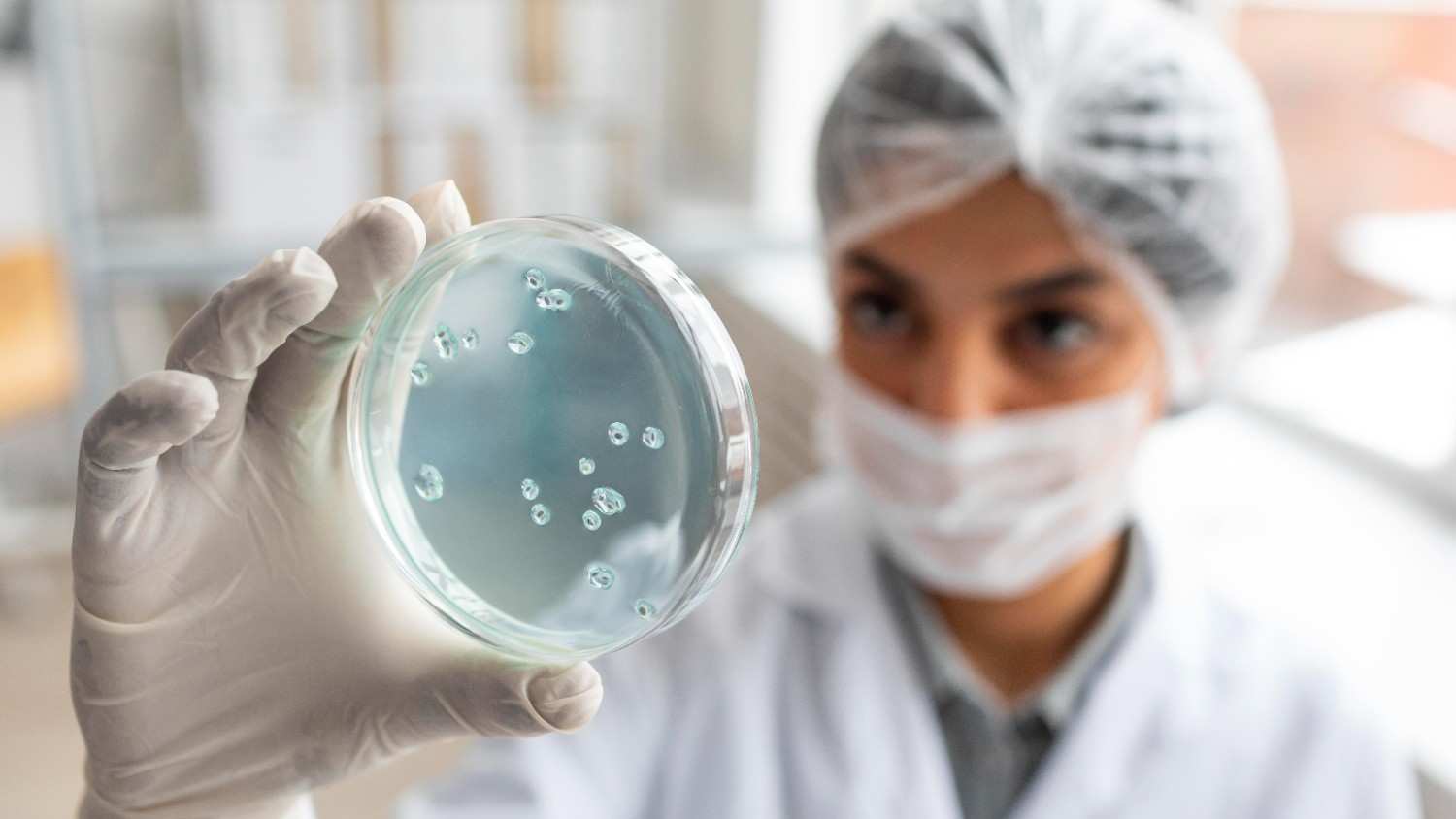
Probiotic screening is a series of lab tests in which scientists collect and isolate promising bacteria, identify them, check whether they can survive the stomach and digestive system, test their potential health benefits, and make sure they are safe and remain alive in the final product.
In simpler words, before a microorganism can be considered for probiotic use, it must undergo a series of laboratory tests to assess its identity, safety, and potential health benefits.
Screening of probiotic bacteria helps researchers identify promising microbial strains and determine whether they are suitable for further research and development.
Understanding how probiotic screening works offers a closer look at the science behind the products designed to support gut health.
Overview of the Probiotic Screening Process
Probiotic screening involves several tests to identify promising bacterial strains, evaluate their potential benefits, and check whether they are safe for human use. Each step helps determine whether a strain is suitable for further research.
| Screening step | What Happens? |
| 1. Strain Isolation | Collecting and separating bacterial colonies |
| 2. Bacterial Identification | Identifying the species and strain |
| 3. Acid Tolerance | Testing survival in stomach-like acidity |
| 4. Bile Tolerance | Checking survival in bile salts |
| 5. Antimicrobial Activity | Testing inhibition of harmful bacteria |
| 6. Adhesion Testing | Checking attachment to intestinal cells |
| 7. Functional Activity | Assessing organic acid, biofilm, and EPS production |
| 8. Safety Assessment | Checking resistance genes, toxins, and contamination |
| 9. Genetic Stability | Checking for changes or loss of important genes |
| 10. Viability and Quality | Measuring live bacteria and product stability |
| 11. Clinical Studies | Evaluating safety and benefits in people |
What Are Probiotics?
Probiotics are live microorganisms that can provide health benefits when consumed in adequate amounts.
They are commonly found in fermented foods, dietary supplements, and certain foods like curd, kombucha, kefir, pickles, and many more. However, not every microorganism is a probiotic, and not every strain offers the same benefits.
| Did you know? Your gut is home to trillions of microorganisms, including bacteria, fungi, and viruses. Together, they play an important role in digestion, immunity, and overall health. Want to know more about your gut microbiome? Explore common myths and science-backed facts in our detailed guide. |
What is Probiotic Screening?
Probiotic screening is a laboratory process used to identify and evaluate microorganisms that may provide health benefits. Researchers usually start by isolating bacteria from sources such as fermented foods, dairy products, or the human gut.
When I worked on a project involving probiotic screening, we used the first stool sample of a newborn baby as a source of potential probiotic bacteria. It was interesting to see how even something as simple as a stool sample could help us explore microorganisms with potential health benefits.
Some commonly studied probiotic candidates belong to groups such as Lactobacillus and Bifidobacterium. Certain yeasts, including Saccharomyces boulardii, are also used as probiotics.
But how is it decided whether a particular microorganism is worth studying as a probiotic?
During screening of probiotic bacteria, it is checked whether a microbial strain can survive conditions similar to those in the digestive tract, interact with the gut environment, and show activities that could be beneficial to health.
They also check whether the strain has any characteristics that could make it unsafe for human consumption.
One important thing to remember is that performing well in laboratory tests does not automatically mean a microorganism will provide health benefits in humans.
Screening helps identify promising candidates for further research. Clinical studies are then needed to understand whether a particular strain actually provides meaningful health benefits in people.
| What are Clinical Studies? Clinical studies are studies where researchers work with real people to understand how a medicine, treatment, or product affects their health. They help researchers determine whether something is safe, effective, and beneficial for human health. |
Screening of Probiotic Bacteria Flowchart
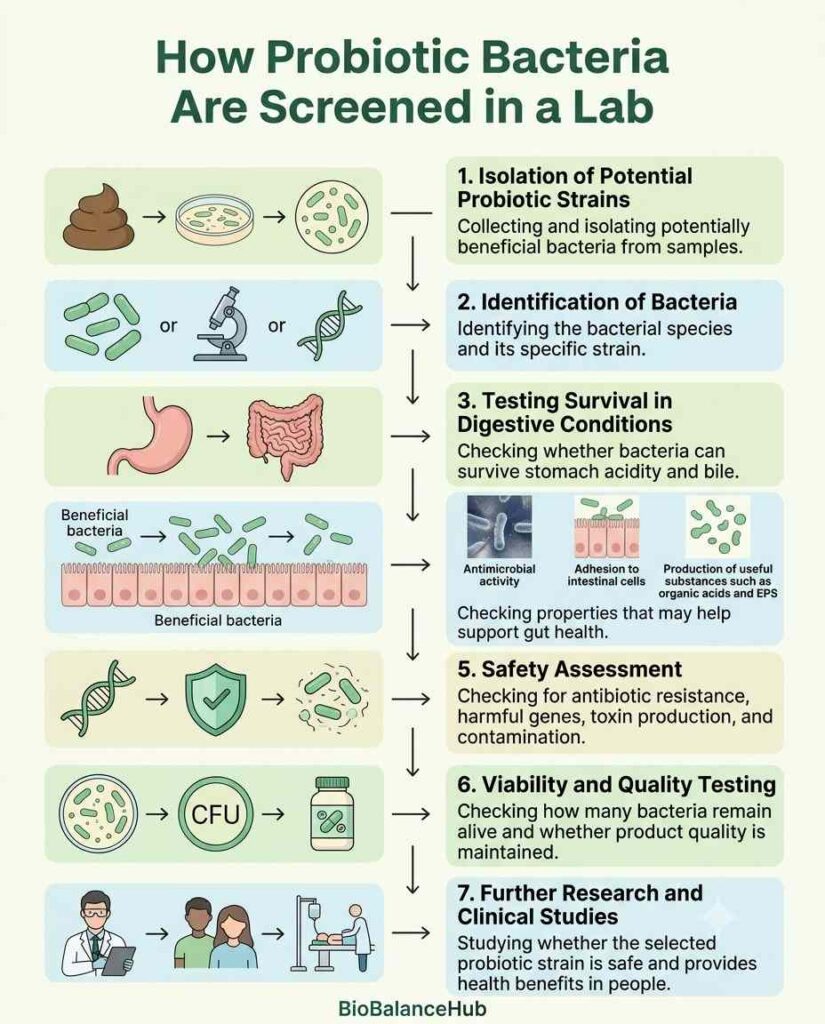
Step 1. Isolation of Potential Probiotic Strains
The first stage involves collecting samples that may contain useful microorganisms. These samples can come from fermented foods such as yoghurt, traditional fermented products, or human gut samples, depending on the research objective.
Scientists process the samples under controlled laboratory conditions and transfer them to suitable growth media. These media contain nutrients that allow particular microorganisms to grow. The samples are then incubated under conditions suited to the organisms being studied.
As microorganisms grow, they may form visible colonies on the surface of the growth medium. Each colony can be picked for further examination and purified through repeated culturing to obtain a more uniform microbial culture.
At this stage, researchers are not confirming that the organism is a probiotic. They are simply isolating potential candidates for further testing.
Step 2. Identification of the Microorganism
Once a microbial culture has been isolated, researchers need to establish exactly what it is. This is important because closely related microorganisms can have different characteristics, including different safety profiles.
Initial identification may involve examining colony appearance, cell shape, staining reactions, and selected biochemical properties. However, these observations alone may not be sufficient to identify a microorganism accurately.
Researchers therefore use molecular methods to examine its genetic material.
Two commonly used approaches include the following.
- 16S rRNA gene sequencing examines a particular genetic region that helps identify bacterial species.
- Whole-genome sequencing examines the organism’s genetic material in much greater detail and can help distinguish closely related strains.
| Are species and strains different, and do they matter? A species is a broader group of related microorganisms, while a strain is a specific variant within that species. For example, two strains belonging to the same bacterial species may differ in their ability to survive digestive conditions or produce particular substances. Therefore, researchers aim to identify candidates at the strain level rather than relying only on their species name. |
Step 3. Testing Survival in Digestive Conditions
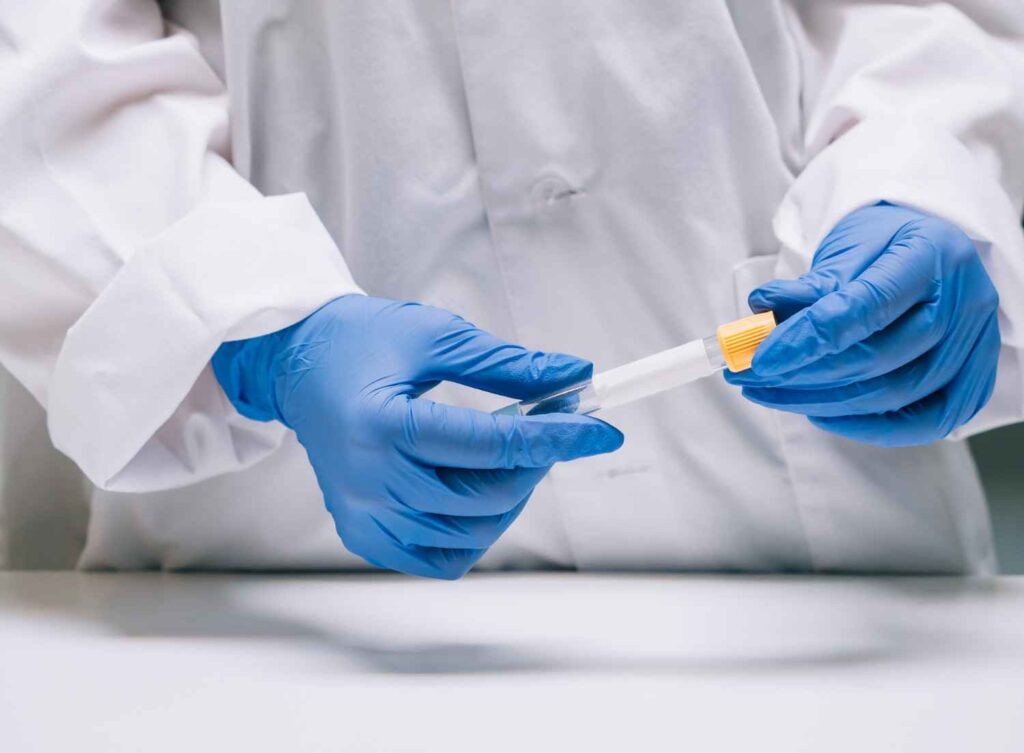
For a probiotic to do its job, it needs to survive the journey through our digestive system. And that is not as easy as it sounds!
The stomach has a highly acidic environment, which can kill many bacteria. Once they move into the small intestine, they encounter bile, a digestive fluid that can also affect their survival.
So, how do researchers find out if these bacteria can handle these conditions?
In the lab, scientists recreate these digestive conditions using specially prepared solutions. They expose the selected bacterial strains to stomach-like acidity and bile to see how many survive.
This helps researchers identify which strains are better equipped to survive the journey through the digestive tract.
Acid tolerance testing
First, researchers check whether the bacteria can survive the acidic environment of the stomach.
For this, they place the selected bacterial strain in a solution that mimics stomach acidity. After a certain period, they check how many bacteria are still alive.
If a good number of bacteria survive, it is a positive sign, and the strain may be worth studying further.
Of course, the lab cannot recreate everything that happens inside a real human stomach, but this test gives researchers a useful idea of how well the bacteria handle acidic conditions.
Bile tolerance testing
Next comes the bile test. Once bacteria pass through the stomach, they enter the small intestine, where they come in contact with bile.
Bile is a digestive fluid that helps break down fats, but it can also make survival difficult for some bacteria.
To check how well a strain handles it, researchers expose the bacteria to bile salts in the lab and then observe whether they survive or continue to grow.
This helps researchers compare different strains and identify which ones can better tolerate the conditions they may encounter in the small intestine.
The results depend on factors such as acidity, bile concentration, exposure time, and testing methods.
Step 4. Evaluating Potential Health Benefits
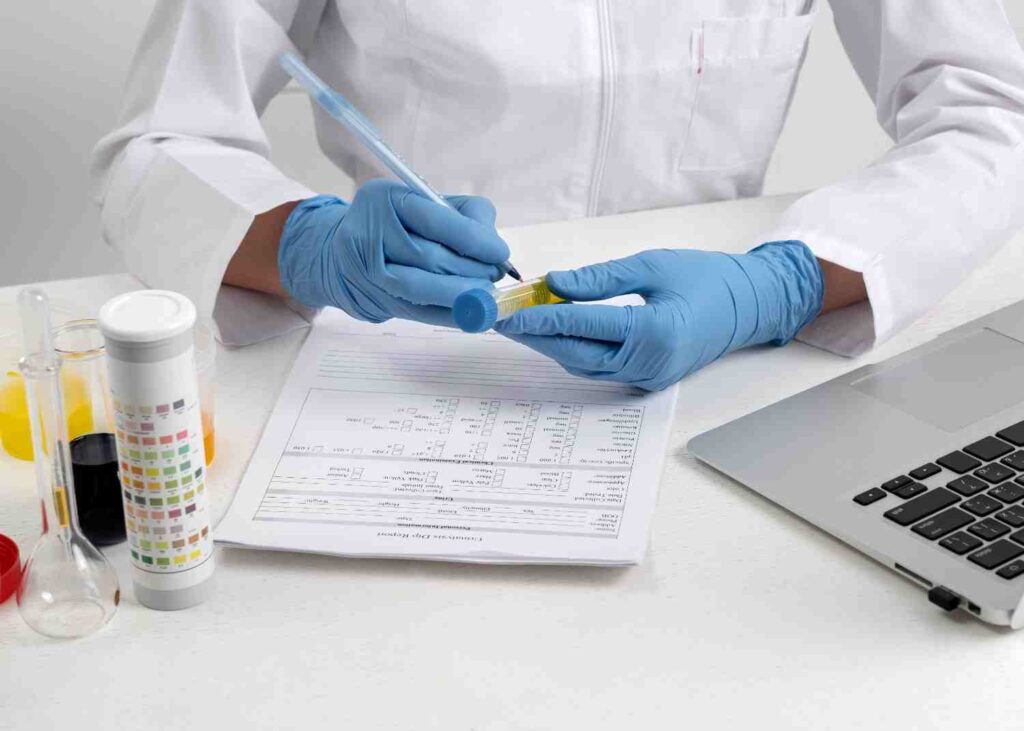
After initial survival testing, it is now time to investigate whether a strain has any specific biological activity that may be useful for human health.
Some common approaches include the following.
Antimicrobial Activity Testing
Our gut naturally contains different types of bacteria, including some that can cause infections or other health problems.
Researchers check whether a potential probiotic strain can slow down or prevent the growth of selected harmful bacteria.
For this, they grow the probiotic strain alongside the target bacteria or test substances produced by the probiotic. They then observe whether the growth of the target bacteria is affected.
If the probiotic shows an inhibitory effect, it may be a promising candidate for further research. However, this does not automatically mean it can prevent infections in humans.
Adhesion Testing
To interact effectively with the gut environment, a probiotic must be able to adhere or attach to the intestinal lining.
Adhering to the gut lining is very important for a probiotic to exert its effect and interact with the surrounding.
In the lab, researchers use intestinal cells or mucus-based models to observe how well the bacterial strain attaches to these surfaces.
Functional Activity Testing
Apart from survival and attachment, researchers may also look at what useful substances a bacterial strain can produce.
For example, some bacteria produce organic acids that can influence the environment around them and affect the growth of other microorganisms.
It is important to study these activities to understand what a particular strain might contribute to the gut environment.
Step 5. Assessing Safety
A microorganism that shows promising functional properties must also undergo appropriate safety assessments.
This is a critical part of probiotic screening because microorganisms intended for consumption should not introduce unacceptable risks.
Researchers examine several factors.
- Antibiotic resistance to determine whether the strain is resistant to antibiotics.
This is important because when you take antibiotics, probiotics also get attacked by them and get killed.
- Virulence-related characteristics: to investigate whether the strain carries genes or produces substances associated with harmful effects.
- Toxin production: whether the selected strain produces any toxin that can harm the human body.
- To ensure that the bacteria maintain their key traits throughout time and do not lose them due to gene loss, genetic stability must be assessed.
| Do you know about Gene Loss? Bacteria can undergo genetic changes over many generations as they adapt to their surrounding environment. If a particular function is no longer needed, the bacteria may gradually stop expressing the gene responsible for it. Over time, mutations or other genetic changes can even lead to the loss of that gene from the genome, meaning it may no longer be passed on to future generations. An important distinction: A gene being switched off does not mean it has been deleted. Sometimes bacteria simply stop using a gene without losing it from their DNA. |
A strain that fails relevant safety requirements should not advance simply because it performs well in other laboratory tests.
Step 6. Measuring Viable Cells and Checking Product Quality
After a strain completes the initial screening phases, researchers assess its viability for mass production and long-term stability within the final commercial product.
One important measurement is the number of viable microorganisms.
This is often expressed as colony-forming units, or CFU. The measure estimates how many microorganisms can form colonies under the specified laboratory conditions.
Checking for unwanted microbial contamination and confirming that the product contains the intended strains is also done at this stage.
Stability testing is another important step.
It examines whether the microorganisms remain viable during storage under specified conditions. Temperature, moisture, packaging, and storage duration can affect microbial survival.
| Looking to understand probiotics better? Probiotics introduce live beneficial microorganisms, while prebiotics provide nourishment that helps certain gut microbes grow. Curious about their uses, benefits, and how they work? Read our guide on: Do Pre and Probiotic Capsules Actually Work? A Microbiologist Explains |
Step 7. Confirming Benefits Through Further Research
Laboratory screening is an early stage of probiotic development, not the final proof of effectiveness.
Promising strains may progress to preclinical studies and, where appropriate, human clinical trials. These studies investigate whether the strain provides the intended benefit, what dose may be effective, and whether it is safe for the population being studied.
Clinical evidence must relate to the specific strain and intended use. Findings from one strain should not automatically be applied to another strain of the same species.
Researchers also consider the quality of the evidence, including the study design, participant numbers, comparison groups, and consistency of results.
Screening of Probiotic Bacteria
Probiotic screening is a structured process that helps researchers identify promising microorganisms and evaluate their potential for use in foods, supplements, and other applications. It typically involves isolation, identification, digestive survival testing, functional assessment, safety evaluation, and quality control.
Each stage answers a different question about the microorganism. Can researchers identify it accurately? Can it tolerate relevant conditions? Does it demonstrate a useful biological activity? Is it suitable for its intended use?
Understanding these steps gives readers a clearer picture of how potential probiotic strains are tested and evaluated before they are considered for further research.
FAQs
1. What are the 3 main types of probiotics?
The three commonly studied probiotic groups are Lactobacillus, Bifidobacterium, and Saccharomyces boulardii, a beneficial yeast.
2. What is the strongest natural probiotic?
There is no single strongest probiotic. Yoghurt with live cultures is a widely available food source, but benefits depend on the specific bacterial strains.
3. What are the signs probiotics are working?
Depending on the strain and individual, you may notice improved digestion, more regular bowel movements, or reduced bloating. Some people notice no obvious changes.
4. Which is better, curd or Yakult?
Neither is universally better. Plain curd provides live cultures and nutrients, while Yakult contains specific probiotic strains. The choice depends on your dietary needs and preferences.
5. Which Indian food is probiotic?
Fresh homemade curd, chaas, pickle, and fermented foods like idli and dosa batter contain live microorganisms. However, not all fermented foods have proven probiotic benefits.
Disclaimer
This article is for informational purposes only and does not constitute medical advice. Consult a qualified healthcare professional for personalized guidance.
REFERENCES
- https://pmc.ncbi.nlm.nih.gov/articles/PMC9099753/
- https://pmc.ncbi.nlm.nih.gov/articles/PMC9323131/
- https://pmc.ncbi.nlm.nih.gov/articles/PMC3910143/
- https://pmc.ncbi.nlm.nih.gov/articles/PMC3023597/
- https://pmc.ncbi.nlm.nih.gov/articles/PMC8829321/
- https://www.journalofdairyscience.org/article/S0022-0302%2821%2900575-0/fulltext
- https://pubmed.ncbi.nlm.nih.gov/33934857/
- https://pmc.ncbi.nlm.nih.gov/articles/PMC9323131/
- https://pmc.ncbi.nlm.nih.gov/articles/PMC10292223/
- https://pmc.ncbi.nlm.nih.gov/articles/PMC9099753/




Post Comment