
Type 2 diabetes is no longer a condition that affects only older adults or people with obvious risk factors. It is appearing earlier, more quietly, and in individuals who may feel perfectly fine.
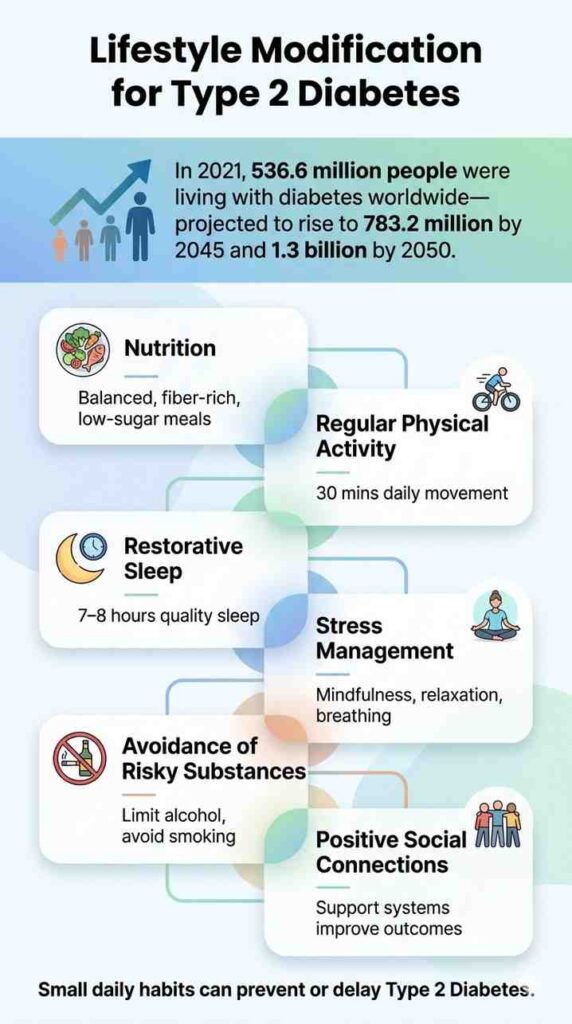
In 2021, 536.6 million people were living with diabetes worldwide, and this number is projected to rise to 783.2 million by 20451 and 1.3 billion by 2050.2
These are not abstract figures. Behind each one is a person managing blood sugar, medications, and the fear of complications. That’s why understanding ‘how to manage type 2 diabetes’ is essential.
The good news is that type 2 diabetes is one of the few chronic conditions where daily choices have real, measurable power. Lifestyle management is not a vague recommendation doctors throw in at the end of a consultation.
It is a structured, evidence-based approach that can delay, manage, and, in some cases, even reverse the course of the disease.2 Let’s first understand what lifestyle changes mean.
What Does Lifestyle Modification for Type 2 Diabetes Mean?
Lifestyle modification refers to deliberate, sustained changes in how a person eats, moves, sleeps, and manages stress. These changes are far more effective in preventing prediabetes from becoming type 2 diabetes.2
The foundation of type 2 diabetes management and prevention emphasises six pillars: nutrition, regular physical activity, restorative sleep, stress management, avoidance of risky substances, and positive social connections.2
Six-Step Lifestyle Checklist: How to Achieve It
Your six-step lifestyle checklist on how to manage type 2 diabetes and prevent it: 2
| Lifestyle Management Pillars | What to Do | How to Achieve It |
| Nutrition (Diet) | Shift to a whole-food, plant-predominant eating plan. Prioritise vegetables, fruits, whole grains, legumes, nuts, and seeds. Cut ultra-processed foods, refined carbs, added sugars, and sugary drinks. | Swap one refined carb per meal with a high-fibre option. Read labels and avoid products with added sugar in the top 3 ingredients. |
| Physical Activity (Exercise) | Aim for 150–300 minutes of moderate aerobic activity weekly + strength training twice a week. Reduce long sitting time with regular movement breaks. | Follow FITT (Frequency, Intensity, Time, Type). Start with 10-min walks after meals. Add bodyweight exercises on alternate days. Move for 2–3 mins every hour. |
| Restorative Sleep (Sleep) | Get 7–9 hours of quality sleep. Address sleep disorders like insomnia or sleep apnoea that affect blood sugar. | Maintain fixed sleep-wake times. Avoid screens 30 mins before bed. Keep room cool/dark. Consult a doctor if snoring or wake tired. |
| Stress Management (Stress) | Recognise chronic stress as a driver of insulin resistance. Build daily stress-reduction habits. Seek help for anxiety/depression | Practise 5–10 mins of mindfulness or breathing daily. Journal in the evening. Reduce one stressor at a time. Consult a therapist if needed. |
| Social Connections (Support) | Build strong relationships with family, friends, or support groups to improve habit consistency and long-term adherence. | Join a walking or diabetes group. Involve family in meals/exercise. Share your health goals with someone close. |
| Avoid Risky Substances (Habits) | Quit or reduce tobacco. Limit alcohol. Avoid recreational drugs, as they worsen blood sugar control and increase risk. | Seek nicotine replacement or medical help to quit smoking. Assess alcohol intake honestly. Replace habits with healthier alternatives like walking or herbal teas. |
Now, let’s explore each one in detail to clear any doubts.
The Power of Losing Weight: Primary Lifestyle Management

Weight management can help in achieving remission of type 2 diabetes.3 4 Excess weight, especially fat around the abdomen and internal organs, drives insulin resistance, making weight control central to the primary prevention of diabetes.
This does not mean a person needs to lose a dramatic amount of weight to see a benefit. A 2 to 10% reduction in body weight over one to four years corresponds to decreases in HbA1c of 0.2 to 1.0 percent, which is clinically meaningful.3
Even modest weight loss improves insulin sensitivity, lowers blood pressure, and reduces the risk of complications. A weight loss journey starts with a balanced diet.
Why Dietary Changes Matter

Dietary habits are one of the major factors for the rising incidence of diabetes mellitus in developing countries.5 Food is not just fuel. For someone with type 2 diabetes, what a person eats directly shapes their blood sugar levels throughout the day.
Refined carbohydrates, sugary drinks, and ultra-processed foods cause rapid spikes in glucose that a struggling pancreas cannot keep up with. 5 Meals should have low-fat, high-fiber, and a limited amount of carbohydrates.5
| Did you know? During World War I and World War II, diabetes deaths actually dropped in parts of Europe. Because food shortages forced people to eat less.5 |
Daily Exercise
Exercise intervention in people with type 2 diabetes has significant improvements in blood glucose levels, BMI, and waist circumference. 6
Losing belly fat is where you can start, as visceral fat leads to many lifestyle diseases.
For adults with type 2 diabetes, the American Diabetes Association and World Health Organization recommend 7
- 150 to 300 minutes of moderate-intensity aerobic activity per week, or
- 75 to 150 minutes of vigorous-intensity aerobic activity, plus
- Strength training two or more times a week
This does not have to mean a gym membership. Brisk walking, swimming, cycling, and even household physical work all count. The key is consistency.
Yoga
Today’s desk job lifestyle has made prolonged sitting the norm, quietly contributing to poorer blood sugar control. Staying seated for long hours can negatively impact metabolism, as moving is an essential part of a daily routine.
Incorporating yoga, especially practices like Surya Namaskar, can be a powerful way to counter these effects. It not only improves flexibility and circulation but also supports better glucose regulation.
Along with a dedicated yoga routine, breaking up long sitting periods with short movement breaks is a simple yet highly effective habit. You can also explore specific yoga poses designed to relieve stiffness and support the health of desk workers.
Other Lifestyle Management: Stress and Better Sleep
Two areas that receive far less attention than diet and exercise are stress and sleep. Both have a direct, biological impact on blood sugar.
Stress Management
When the body experiences stress, it releases cortisol. During stressful events, cortisol induces the release of glucose into the circulation.8
In the context of type 2 diabetes, excessive glucose with impaired insulin response promotes insulin resistance and weight gain.8
That is why stress management is far more important than you think.
Better Sleep
Sleep tells a similar story. Sleep deprivation results in increased stress, leading to increased insulin resistance and reduced glucose tolerance.9
There are many ways you can induce better sleep. You can try calming yoga and herbal teas like chamomile tea, before bedtime. They help in inducing sleep naturally, and you might see better health.
Early Awareness the Key
Type 2 diabetes is a condition shaped heavily by lifestyle. That’s why learning how to manage type 2 diabetes through lifestyle changes is important.
Weight management, thoughtful eating, regular physical activity, adequate sleep, and stress reduction are not supplementary suggestions. They are the primary tools, supported by decades of research, for managing and in many cases improving the course of this disease.
Type 2 diabetes does not appear overnight. It develops over the years, often silently. That is why early awareness matters so much. Catching elevated blood sugar in the prediabetes stage, or even recognizing risk factors early enough, gives a person a much wider window to act.
References
- https://pmc.ncbi.nlm.nih.gov/articles/PMC11057359/
- https://pmc.ncbi.nlm.nih.gov/articles/PMC11949759/
- https://pmc.ncbi.nlm.nih.gov/articles/PMC11256236/
- https://pubmed.ncbi.nlm.nih.gov/38423026/
- https://pmc.ncbi.nlm.nih.gov/articles/PMC5426415/
- https://pmc.ncbi.nlm.nih.gov/articles/PMC7947168/
- https://pmc.ncbi.nlm.nih.gov/articles/PMC10834384/
- https://pmc.ncbi.nlm.nih.gov/articles/PMC9561544/
- https://pmc.ncbi.nlm.nih.gov/articles/PMC10693913/






2 comments