
If you’re anything like me, you probably googled “how to improve digestion?” at least 50 times. I’ve been dealing with IBS and H. Pylori infection for a while, and honestly, it pushed me into a whole new world of gut health. Simple probiotic foods like curd and chaach began making a noticeable difference, and while exploring more gut-friendly options, I came across a Kombucha recipe that really caught my attention.
Kombucha tea is refreshing, fizzy, flavourful, and way easier to make at home than it looks. I’m going to try making Kombucha at home, and you should too, as it is way cheaper than the store-bought ones!
So if you’re ready to give your gut a delicious, bubbly hug, let’s get brewing Kombucha!
What Is Kombucha?
Kombucha is basically a fermented probiotic drink made from yeast, bacteria, tea, and sugar. It tastes slightly tangy, like a fizzy drink that feels like soda but is healthy.
A SCOBY is where all the good bacteria and yeast live. I was confused, too, when I first heard of SCOBY. Just as Kefir needs a few kefir grains from the previous batch to start a new one, Kombucha also creates its own SCOBY every time you brew it. It forms a thick jelly-like layer on top of the tea and may look a little unusual at first, but that’s how it normally looks.
I know you might be worried about the SCOBY; that’s why a more detailed explanation is below.
What is Kombucha SCOBY?
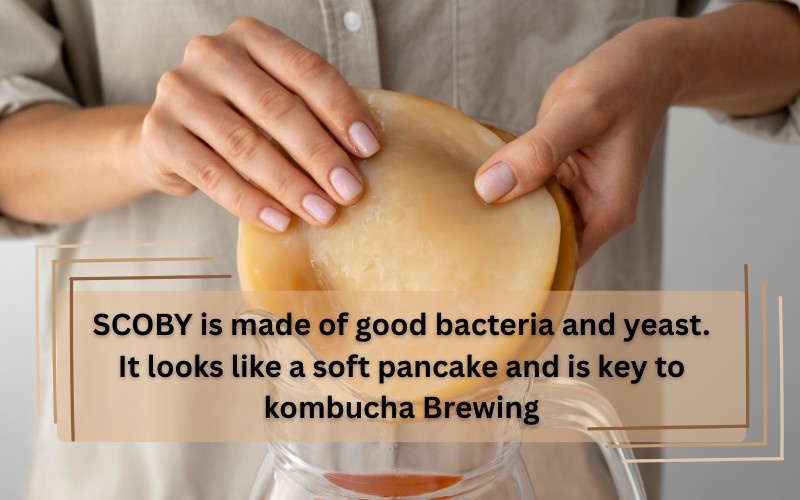
A SCOBY is basically a squishy, jelly-like pancake made of good bacteria and yeast. It stands for:
👉 Symbiotic
👉 Culture
👉 Of
👉 Bacteria
👉 Yeast
But you don’t need the science — know this:
- It’s the starter culture (just like how dahi is the starter culture to make more dahi) that turns your sweet tea into kombucha.
- It “eats” the sugar and creates probiotics, fizz, and that tangy taste.
What You Need to Make Kombucha At Home?
To make a Kombucha drink, you only need a few things:
- 1 SCOBY
- 1 cup regular sugar (don’t replace it—SCOBY needs it)
- Your favourite tea leaves (black, green, or white tea)
- 1 litre of water
- 1 cup starter liquid (from a previous kombucha batch or store-bought raw kombucha)
- 1 big glass jar
- A cloth/napkin + rubber band
Step-by-Step At-Home Kombucha Recipe
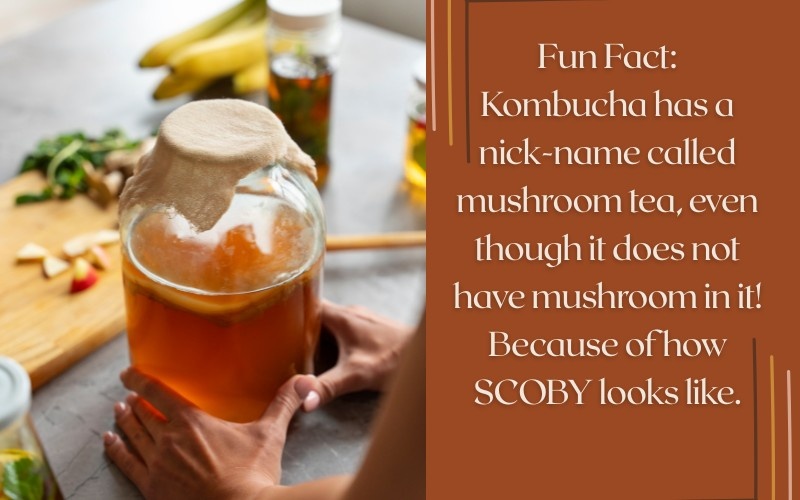
Making this drink at home is not that big a deal. To put it simply, the kombucha recipe happens in two stages. The first part is called first fermentation, which takes about 7 to 10 days. And the second fermentation takes only 1 to 2 days. Here’s how you can start:
- Boil the Water
Bring about 1 litre of water to a boil.
- Add Sugar + Tea
Turn off the flame. Add sugar and tea leaves. Let it steep for around 10–15 minutes. Add the normal sugar we have at home. Don’t replace it with any other type, like brown sugar or jaggery. And for the tea, the most preferred ones are black tea leaves, as they give a strong flavour to kombucha tea. But you can also add white or green leaves for a milder effect. The blend of these teas is also used. Just make sure you’re using real tea leaves and not the artificial or flavoured ones, because the bacteria & yeast (culture) need proper nutrients from the tea to do their job and ferment the drink well.
- Let the Tea Cool Down
Strain the leaves and let the tea cool. Hot tea can hurt or even kill your SCOBY.
- Add SCOBY + Starter Liquid
Pour the cooled tea into the glass jar. Now add your SCOBY and the starter liquid. The beginners who do not have SCOBY and starter liquid from the last batch can get them online as well.
- Cover and let it ferment.
Cover the jar with a clean cloth and secure it with a rubber band. Now place it in the warm corner of your kitchen (Do not keep it in direct sunlight) and let it ferment for 7-10 days. The longer you keep it, the tangier the tea becomes.
- Taste Test
After day 7, gently taste it. If it’s too sweet, let it sit a bit longer. If it’s perfectly tangy, it’s ready!
Where Can You Get a SCOBY?
You have three easy options:
1. Buy It Online (Easiest)
You can find SCOBYs on:
- Amazon
- Flipkart
- Instagram sellers (just check reviews)
- Brands that sell starter kits
They usually come with a little liquid called starter tea—very important!
2. Ask Someone Who Makes Kombucha
Anyone who brews kombucha regularly has LOTS of SCOBYs. They multiply. So people are always happy to share. If you have:
- A friend
- A neighbour
- Someone from yoga, gym, or a health group
Just ask! They’ll give you one for free.
3. Grow One at Home (Takes Time)
If you want to make your own SCOBY:
- Buy plain, unflavoured, raw kombucha from the store.
- Pour it into a clean jar.
- Cover with a cloth and keep it aside for 1–2 weeks.
- A thin jelly-like layer will start forming on top. That’s your SCOBY baby! This method takes longer but is fun.
The Second Fermentation of Kombucha Recipe
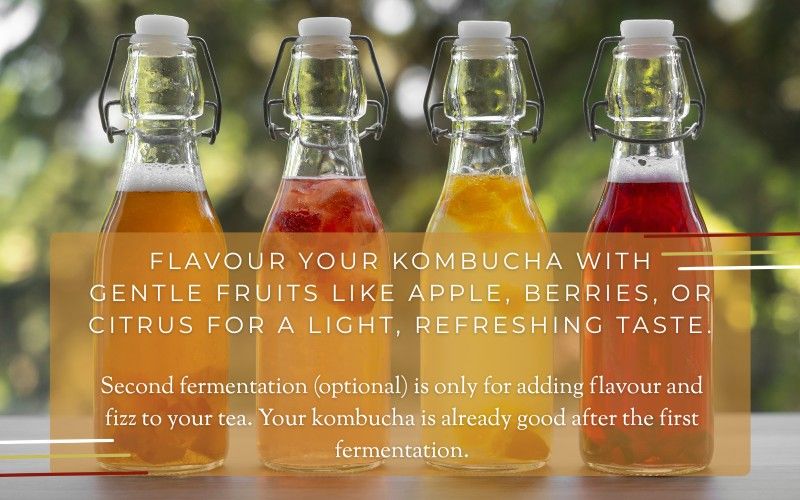
Second fermentation involves adding flavours, which is optional. But so worth it if you want that real soda-like fizz. Some fun kombucha flavouring ideas:
- Lemon + ginger
- Mint
- Mango
- Orange zest
- Cinnamon + apple
- Strawberries
How To Add Flavour To Kombucha Tea?
Pour the kombucha into clean, sturdy bottles, add your chosen flavour ingredients, and close the lids tightly. Let the bottles sit for 1–2 days. Be a little careful during this stage, because natural gas (CO₂) builds up quickly.
Keeping it longer than 2 days can increase pressure and may even crack weak bottles, so always use good-quality bottles. Two days is usually perfect for a nice fizz. After that, open the bottles slowly and enjoy.
Kombucha Benefits: Why Your Gut Actually Loves This Drink
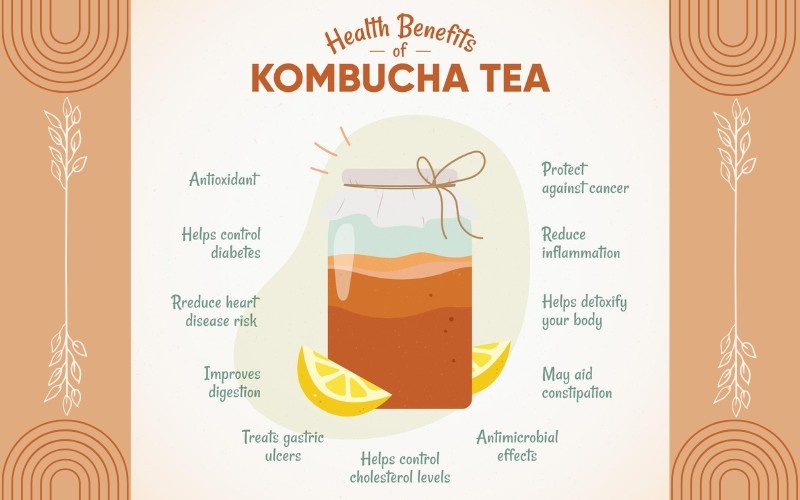
If you live with IBS or regular acidity issues, you know how unpredictable digestion can be. One day you feel fine, and the next, bloating, discomfort, and a heavy feeling after meals. This is where Kombucha comes into the picture, not just as a fizzy drink but one packed with natural goodness, as it is rich in:
- Good bacteria (probiotics)
- Organic acids
- Antioxidants
Together, these elements make kombucha a gentle, everyday drink for people trying to improve their gut health naturally.
Key Kombucha benefits you may notice:
- Helps improve digestion
- Reduces bloating and heaviness
- Supports a healthier gut microbiome
What makes this probiotic drink even more interesting is that it doesn’t just add good bacteria to your gut—it also helps them survive and grow.
The Kombucha tea contains natural components like plant fibres and phenolics, which act as prebiotics. These compounds feed the good bacteria already living in your gut. Because it offers both probiotics and prebiotics, this drink is a potential synbiotic drink that supports gut health more effectively.
Some brands even add extra fibers like inulin, in the Kombucha drink to enhance the effects. And there are proven potential health benefits of adding extra fibre in this probiotic drink, as per the recent research published in the Journal of Food Science.
In simple words:
Kombucha doesn’t just bring good bacteria into your system; it helps them thrive.
Final Thoughts: Kombucha Recipe
Making kombucha at home is honestly like watching a little science experiment that ends with a delicious reward. If you’re making this for gut issues, to support digestion, or want to get rid of daily bloating scenarios, it can be a great addition. It is a great alternative to soda.
At first, I thought it would be difficult, but making kombucha at home is actually super simple. Take it slow, start with small amounts, and listen to your body.
And if you try this recipe, send me pictures—I’d love to see your kombucha babies grow!
FAQs
1. Is Kombucha alcoholic?
No, it is not an alcoholic drink. However, it does have small traces of alcohol due to natural fermentation. Homemade and store-bought kombucha usually contains less than 0.5% alcohol, which is similar to what you might find in fermented foods like kanji or overripe fruit. For most people, this amount is negligible and safe.
2. When should you drink Kombucha?
The best time to have this drink is between meals or during the day. You should not drink it empty stomach, especially if you have IBS or acidity issues. Many people prefer having it mid-morning or in the afternoon as a refreshing, gut-friendly drink. Start with a small amount (a few sips or half a glass) and see how your body responds before increasing the quantity.
3. How long does kombucha brewing take?
Kombucha brewing usually takes 7 to 10 days for the first fermentation, depending on the temperature and taste preference. Warmer weather speeds up the process, while cooler conditions may take a little longer. Once it tastes slightly tangy and refreshing, the first brew is ready. And if you want to add flavour, which is called second fermentation, it takes an extra 1 to 2 days.
4. What are the signs that kombucha brewing is going wrong?
If kombucha brewing goes wrong, you may notice fuzzy green, black, or blue spots (mould) or a strong, rotten smell. Healthy kombucha should smell slightly sour and look smooth and jelly-like. If something looks dry, fuzzy, or smells unpleasant, it’s best to discard the batch and start fresh.


Post Comment